Washers · basement laundry · South Capitol · Downtown
Washer Repair in Downtown Olympia, WA
A drum holding water at the bottom of a 1915 Craftsman’s basement stairs, a spin that never arrives, water creeping toward the furnace.
- ONE FEE
- buys the meter visit · then sits inside the repair total
- ON THE VAN
- Basement and stacked pairs
- 14 MIN
- off the Marvin Rd lot · the invoice skips the mileage
- EPA 608 Universal: every tech certified
- Whirlpool-family and LG authorized service
- Sealed systems repaired in your kitchen
- Appliance repair license, Washington
- Seven days, eight to seven
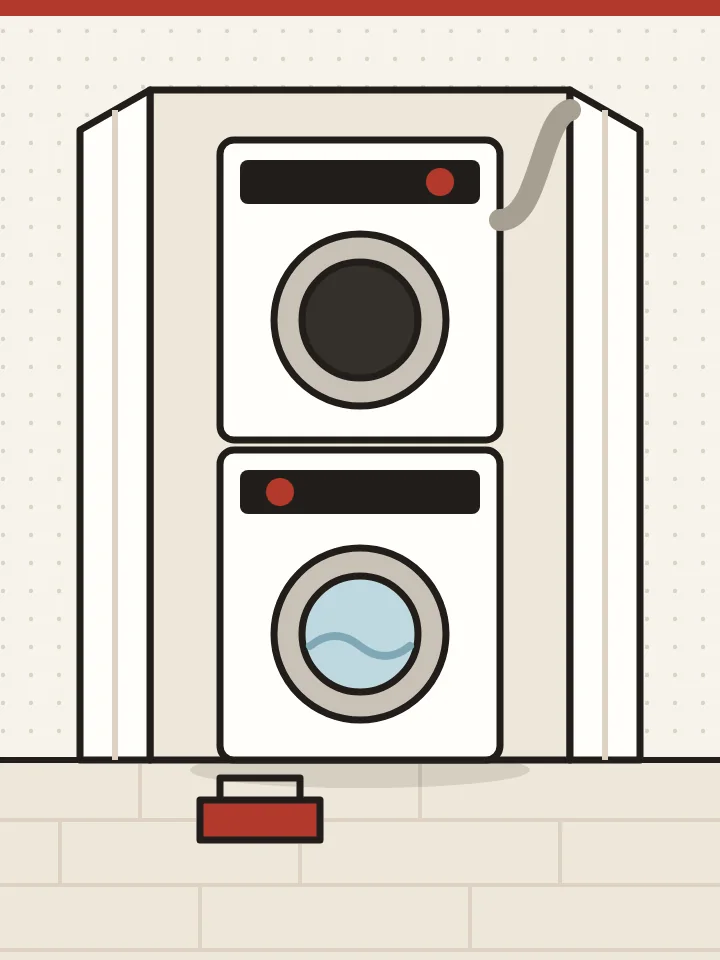
Washers in the old houses of South Capitol and the condos downtown
The Craftsman and Colonial Revival houses of South Capitol and the Bigelow Highlands were built between about 1900 and 1935, and their laundry lives in the basement, down a stair that was framed for coal buckets, not appliances. The floor is concrete, the drain is a standpipe that was added in the 1950s, and the washer is often a top-loader because a front-loader would not have made the turn. Downtown, the newer condos and the apartments over the storefronts run stacked pairs in a closet. We come in from Lacey on I-5 to exit 105, and the Capitol Campus, Percival Landing and South Capitol are a few blocks in any direction.
Old basements are damp basements, and Olympia gets enough rain to keep them that way from October to May. A washer that sits at 50 degrees on a concrete floor in a wet basement rusts its cabinet from the bottom, grows mildew in a front-load gasket and corrodes the pump connector. The city water, drawn from wells, is moderately hard, and grit from old galvanized supply lines in these houses clogs inlet screens faster than in newer neighborhoods. The call we hear most from South Capitol: the washer filled, stopped, and the tenant found it full the next morning with an error on the panel.
What the symptom usually means
Cycle halted with the tub still full
A drain pump that is clogged or burned out, or a hose that has collapsed where it meets an old basement standpipe. The tub is drained, the pump opened and then cleared or replaced, and the standpipe is checked for backing up, since in these houses it sometimes does.
Fills, agitates, will not spin
A lid switch, a lid lock, a worn clutch, a snapped drive coupler or a motor control board, depending on the machine. We test the switch first because it is fast and common, then the motor and the board. Before we go any further you receive the part’s name and a written figure.
Water on the basement floor
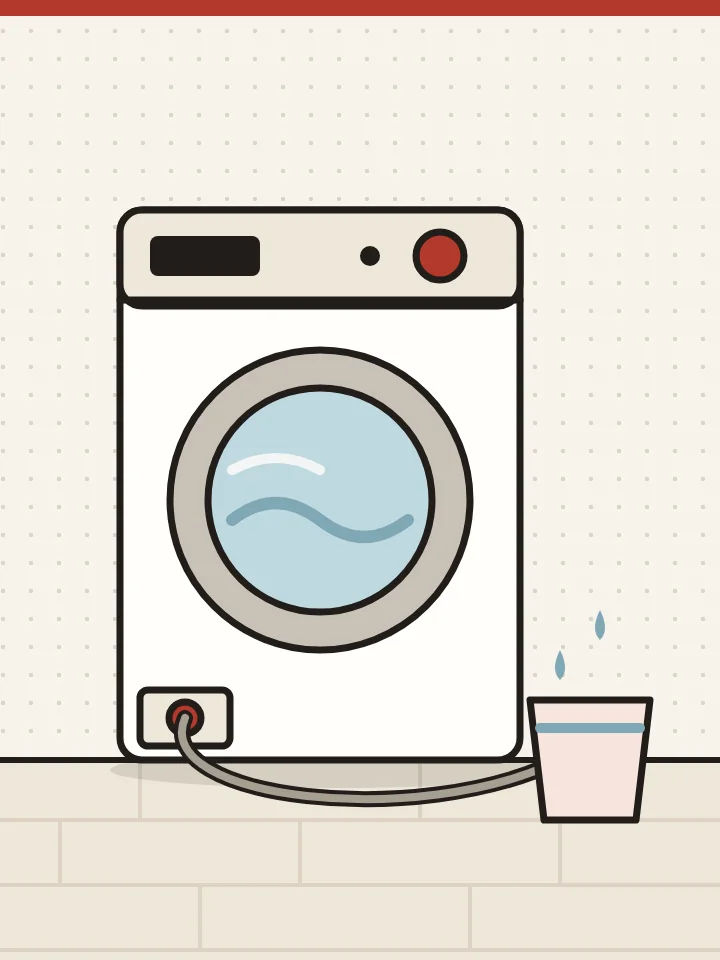
A drain hose split with age, a tub seal weeping, a torn front-load boot, or the inlet valve dripping at its fitting. With the panels off we run a cycle and trace the source. Old basements hide leaks well because the floor drains, so we look at the machine, not the puddle.
Grinding, banging, or a machine that wanders
Tired suspension rods in a top-loader, worn shocks in a front-loader, or a bearing failing in either one. Stacked pairs in downtown condos walk because the stacking kit was never bolted. We replace the worn suspension, level the machine on a floor that is rarely level, and bolt the stack if that is the problem.
Slow fill or none at all
Grit-packed inlet screens from old supply lines, a valve solenoid open, or a supply valve on the wall that has seized half shut. We clean the screens, test each solenoid, and check pressure at the hose. Galvanized pipe in a 1920s basement sheds rust into the screens for years.
Fault code with the door locked shut
The control board halted the cycle because the pressure switch reports water, the motor did not report speed, or the door lock did not confirm. We read the code, drain any water, and test the switch, the lock and the motor sensor. Forcing the door is not on the list.
The procedure
- Water drained by hand before anything is unplugged, moved or opened
- Each of pump, valves, lock, pressure switch and motor tested on the meter
- The broken part explained in plain terms, plus a single written figure to accept or turn down
- Drain pumps, inlet valves, lid switches, couplers and belts kept in the van’s stock
- A complete cycle through the dry spin, floor mopped, warranty term written on the invoice
Washer repair in South Capitol and downtown Olympia, tested at the machine
Once the technician reaches the bottom of the stairs, the work is orderly. The drum is emptied first. Then a cycle runs with the meter attached: voltage at the inlet valves, current at the drain pump, plus a continuity check on the lid or door lock, the pressure switch compared with a known water level, the motor windings measured. Front-loaders have the boot pulled back and the drain filter opened. In a condo closet, a stacked pair gets the dryer lifted off if the washer must come apart. Most of the time the fault has a name inside twenty minutes, and the repair turns into a single written figure that already has the diagnosis fee sitting in it.
Speed Queen, Bosch, Electrolux, Kenmore, Frigidaire, Samsung, LG, GE, Maytag and Whirlpool washers all come through, including the compact European-sized units in downtown apartments. State employees on the Capitol Campus who cannot leave a desk at 2 in the afternoon can have the window that opens at 8, the one that closes at 7, or a Saturday. Landlords with houses in South Capitol approve the figure by phone or email; the invoice, a photo and the written warranty reach them by email while the tenant carries on. A part on order means a second trip from us to install it, and nothing more is added to the bill. Washer repairs are priced once the diagnosis is done, in writing, never over the phone.
Asked in Downtown & South Capitol
Does a washer have to leave a South Capitol basement to be repaired?
Almost every washer is repaired where it stands, so it rarely has to come up the stairs. Pumps, valves, switches, belts and boards are reached with the machine pulled a foot from the wall. If a washer has to be replaced, the stairs become your problem and we say so early.
I work on the Capitol Campus and cannot be home midday. What windows do you have?
The first window of the day starts at 8, the last one runs to 7, and Saturdays keep the same hours. Say which suits when you request the visit. Dispatch calls when the van leaves Lacey, and from exit 105 the window usually holds to the half hour.
Why does my downtown Olympia washer fill so slowly?
Grit in the inlet screens, most often. Older buildings downtown and in South Capitol still have galvanized supply lines that shed rust and scale, and the moderately hard city water adds to it. We clean the screens on nearly every washer call. A dead valve solenoid is the next most common cause.
The washer is a stacked pair in a condo closet. Can you work on it?
Yes, and it is a normal downtown job. The dryer comes off the washer when the washer needs to open up, and goes back on with the stacking kit checked and bolted. Mention the floor number and where to park when you book, so the visit time goes to the washer and not to hunting for a space.
What does washer repair cost in South Capitol?
The diagnosis carries a set fee, given by dispatch when you call. After the technician has measured the pump, the valves, the lock and the motor, the repair is put in writing as one total that contains that fee. Nothing is priced before that, because a lid switch and a motor board are not the same job. If you decline, your total is the diagnosis and nothing more.
By brand
Washer repair, area by area
Also repaired in Downtown & South Capitol
The other five follow the same routine
In Downtown & South Capitol every machine meets the meter first, then gets a single written price with the visit fee already tucked in, and a warranty term on the invoice.
 Refrigerator & Freezer repairVisit fee · absorbed into the repair figure
 Dryer repairVisit fee · absorbed into the repair figure
 Dishwasher repairVisit fee · absorbed into the repair figure
 Oven & Range repairVisit fee · absorbed into the repair figure
 Ice Maker repairVisit fee · absorbed into the repair figure
How a visit runs
From the first phone call to the last test cycle
- You reach out
Dispatch picks a two-hour slot with you, most often today or tomorrow, and calls again once the van rolls away from the shop on Marvin Rd.
- Measure first
An amp clamp, thermometer or ohmmeter goes on the machine before anyone says what is wrong. Then the dead part gets named in words anyone can follow.
- The number, written
Repair cost goes on the ticket as one total with the visit fee already baked in. Say yes or say no; nobody bills by the hour while you think.
- Repair on the spot
Pumps, valves, heaters, igniters, rollers and boards for the usual models travel in the bins behind the driver, which closes most jobs on that first stop. A part on order means a second trip at no added charge.
- Test and paperwork
You watch a full cycle run, the floor and panels are left as we found them, and an emailed invoice carries the written warranty term.
Washers in Downtown & South Capitol: a single visit and a single price.
One call sets a two-hour window. The technician arrives with a meter, the fix is priced on the ticket with the visit fee already tucked into it, and the invoice spells out the warranty. Yelm and Ruddell Rd get identical terms.