Ovens & ranges · gas and electric · South Capitol · Downtown
Oven and Range Repair in Downtown Olympia, WA
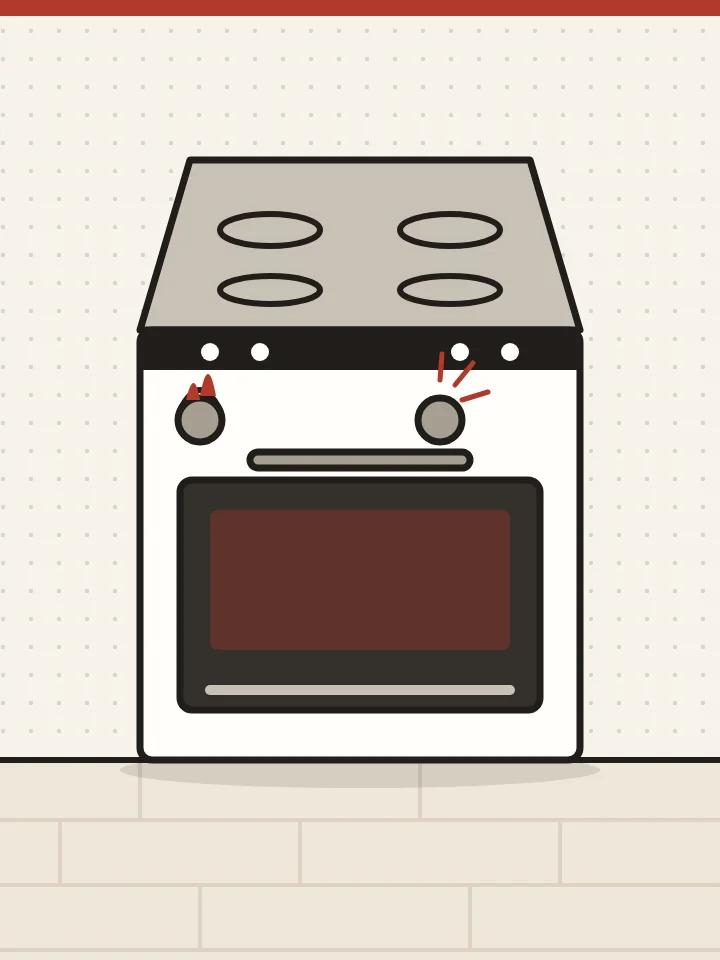
The oven igniter glows and the gas never lights, the bake element in a South Capitol range has a bright spot and a dead end.
- ONE FEE
- buys the meter visit · then sits inside the repair total
- ON THE VAN
- Gas, electric and induction
- 14 MIN
- off the Marvin Rd lot · the invoice skips the mileage
- EPA 608 Universal: every tech certified
- Whirlpool-family and LG authorized service
- Sealed systems repaired in your kitchen
- Appliance repair license, Washington
- Seven days, eight to seven
Ranges in old South Capitol kitchens and new downtown ones
A South Capitol kitchen from 1912 was built around a wood cookstove and a chimney. The chimney is still there, bricked up behind the range, and the gas line that feeds a modern six-burner was run in 1960 through a hole in the floor. Natural gas serves the whole district, so gas ranges are the majority in the old houses, with electric and induction in the condos downtown, where the building never had gas at all. The 240-volt circuits in the old houses were added later and sometimes show it. The van reaches South Capitol from Lacey by exit 105 and Capitol Way, and downtown is a turn away.
Gas ranges fail at the igniter, the spark electrodes, the valve and the air shutter. Electric ones fail at the bake element, the oven sensor, the infinite switches behind the knobs and the board. State employees with a fixed day discover all of this at dinnertime, and a range that will not light on a Tuesday evening is our most common evening request from the Capitol Campus side. One scene: a Colonial Revival on a South Capitol street, a gas oven that reaches 250 and stalls, the roast going back in for a second hour. Blame an igniter that opens the valve late because it is weak, which a clamp meter will confirm.
What the symptom usually means
Igniter glows, no flame in the oven
The igniter has stopped drawing the amperage that the safety valve demands before opening. Gas ovens fail this way more than any other, and the fix goes quickly. A clamp goes on the igniter lead, the reading is compared with spec, a new igniter goes in, and we confirm the burner lights evenly along its length before closing the panel.
Surface burner sparks but will not catch
Possible causes: a cracked electrode, one soaked by a boil-over, a spark module with a dead terminal, or a cap knocked crooked. Occasionally all the burners click because a single electrode shorts. Module and electrodes get tested one at a time until the failing part shows itself.
Oven runs cold, hot or uneven
A drifted temperature sensor, a bake or broil element that has burned open on an electric oven, or a sticking relay on the board could all be behind it. Sensor resistance is read against the chart, the element is watched for current draw, and a thermometer confirms the oven once the repair is done.
Code on the display and the oven locked
An F-code usually implicates the sensor, lock motor, keypad or board, and the meter has the final word instead of the range display. Locks that jam after a self-clean turn up often in South Capitol houses where the oven works hard. The van stocks most sensors and locks.
Glass-top element out or will not turn down
The radiant element may be open, a limiter may have failed, or an infinite switch may have welded shut and left the burner stuck on high. That switch is a safety hazard and gets replaced immediately. The meter goes on the element and the switch alike, and we inspect the wiring under the glass for browning.
Yellow flame, soot on the pans, smell of gas cooking
Either the burners are set up for propane on a natural gas line, or nobody adjusted the air shutters after installation. A yellow flame means fuel is going unburned. Correct orifices for natural gas go in, the shutters get set, and every burner and the oven flame are checked.
The procedure
- Outlet voltage or gas supply and flame verified ahead of any blame on the range
- Igniter amps, element draw, sensor ohms, switch and module readings all taken
- The dead part named in ordinary English, a single figure on paper, the decision left to you
- Stocked on the van: igniters, bake elements, sensors, spark modules, switches, door locks
- Oven verified by thermometer, each burner lit, warranty length stated on the invoice
Range and oven repair in South Capitol and downtown Olympia, measured not guessed
The technician starts at the supply. Both legs of the 240 receptacle measured on an electric range, or the flame on a working burner examined on gas. Then the symptom leads: a clamp on the igniter for an oven that glows and never lights, resistance across the element for an oven that heats slowly, the sensor compared to its resistance chart when the oven runs hot or cold, the spark module’s output for a burner that clicks. A wall oven slides out of its cabinet far enough to reach the same parts. Once the culprit turns up you hear what it is and why it matters, and then a single written number follows, with the visit fee as its first part.
Ranges, wall ovens and cooktops from Kenmore, Amana, Electrolux, Bosch, LG, Samsung, Maytag, Frigidaire, KitchenAid, Whirlpool and GE all come through our hands, gas and electric, plus the induction cooktops in the newer downtown condos. Fixed-hours households near the Capitol Campus can book the 8 o’clock window, the last one before 7, or a Saturday. South Capitol rental owners reply yes by phone or email and receive the invoice with the written warranty by email. Suppose the fault lies in the house wiring or gas supply and not the range: the diagnosis says so, and the visit fee is the extent of the bill. A range or oven repair is priced once the diagnosis is complete, on paper, and the diagnosis fee forms the first portion of that figure.
Asked in Downtown & South Capitol
Do you repair gas ranges in the old houses of South Capitol?
Yes; most South Capitol ranges run on natural gas. Usual faults include a weak oven igniter, a spark electrode, valve coils, or an air shutter nobody ever set. While we are there we also check the gas line and the shutoff behind the range, because some were run decades ago.
My oven downtown reads the right temperature but food takes forever. Why?
A sensor that reads low leads the control to think the oven has hit temperature when it has not. Its resistance is tested against the chart and the sensor replaced if it is off. An open bake element on an electric oven produces the same symptom, since the broil element alone cannot carry the load.
Can you work on a wall oven in a South Capitol kitchen?
Yes to single and double wall ovens, gas or electric. Sliding the unit forward in its cabinet puts the sensor, element, lock motor and board within reach, and old cabinetry is protected while it is out. Wall oven parts mostly match range parts, and most are aboard the van.
The burner clicks nonstop even when it is off. Is that a fire risk?
More nuisance than danger, though it deserves a fix. A wet or cracked electrode, or a spark module whose output is stuck, keeps the igniter firing. If the outlet is within reach, pull the range plug. Module and electrodes get tested and the faulty one replaced.
How much does oven and range repair cost in downtown Olympia?
The diagnosis has its own fee, and that fee stands alone until the technician has measured the igniter, element or sensor. Afterward the repair becomes one written number that starts from it. Should you skip the repair, that fee is the total due, yet you still learn what ails the range.
By brand
Oven & Range repair, area by area
Also repaired in Downtown & South Capitol
The other five follow the same routine
In Downtown & South Capitol every machine meets the meter first, then gets a single written price with the visit fee already tucked in, and a warranty term on the invoice.
 Refrigerator & Freezer repairVisit fee · absorbed into the repair figure
 Washer repairVisit fee · absorbed into the repair figure
 Dryer repairVisit fee · absorbed into the repair figure
 Dishwasher repairVisit fee · absorbed into the repair figure
 Ice Maker repairVisit fee · absorbed into the repair figure
How a visit runs
From the first phone call to the last test cycle
- You reach out
Dispatch picks a two-hour slot with you, most often today or tomorrow, and calls again once the van rolls away from the shop on Marvin Rd.
- Measure first
An amp clamp, thermometer or ohmmeter goes on the machine before anyone says what is wrong. Then the dead part gets named in words anyone can follow.
- The number, written
Repair cost goes on the ticket as one total with the visit fee already baked in. Say yes or say no; nobody bills by the hour while you think.
- Repair on the spot
Pumps, valves, heaters, igniters, rollers and boards for the usual models travel in the bins behind the driver, which closes most jobs on that first stop. A part on order means a second trip at no added charge.
- Test and paperwork
You watch a full cycle run, the floor and panels are left as we found them, and an emailed invoice carries the written warranty term.
Ovens & ranges in Downtown & South Capitol: a single visit and a single price.
One call sets a two-hour window. The technician arrives with a meter, the fix is priced on the ticket with the visit fee already tucked into it, and the invoice spells out the warranty. Yelm and Ruddell Rd get identical terms.