Ovens & ranges · gas and electric · East Olympia
Oven and Range Repair in East Olympia, WA
Burners that click without catching, an oven stuck around 300 while the roast waits, an error code glowing on the display.
- ONE FEE
- buys the meter visit · then sits inside the repair total
- ON THE VAN
- Gas, electric, induction
- 12 MIN
- off the Marvin Rd lot · the invoice skips the mileage
- EPA 608 Universal: every tech certified
- Whirlpool-family and LG authorized service
- Sealed systems repaired in your kitchen
- Appliance repair license, Washington
- Seven days, eight to seven
Ranges in East Olympia: natural gas, old wiring, new glass tops
Natural gas runs down Lilly Rd and through most of the Eastside and Bigelow, so the district is split fairly evenly between gas ranges and electric ones, with a growing number of glass-top and induction units in kitchens that were remodeled in the last decade. The houses date from the 1940s through the 1970s, and the wiring behind the range is sometimes older than the range by forty years. A 240-volt receptacle with one leg gone soft will make an electric oven heat slowly and a cooktop behave strangely, which makes it the first measurement the technician takes. The van reaches East Olympia by Martin Way from Marvin Rd.
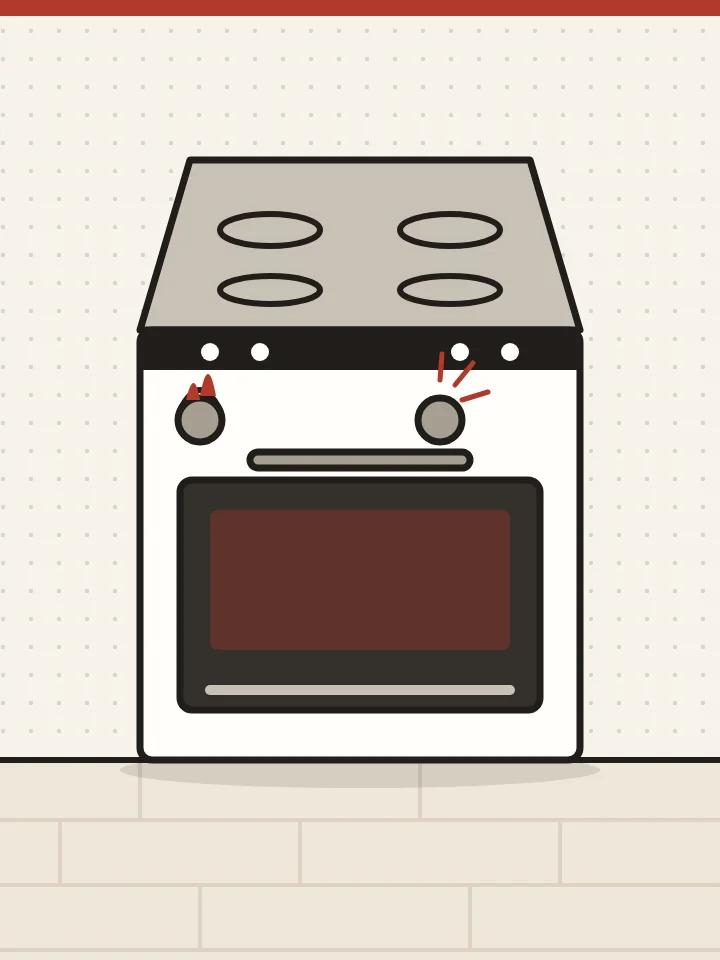
Gas ranges here fail the way gas ranges do: an oven igniter glowing dull orange without ever pulling the current the valve requires, a surface burner with a cracked spark electrode that clicks forever, a badly adjusted air shutter that leaves the flame yellow and soots the bottom of every pan. Electric ranges lose bake elements, which are obvious, and oven sensors, which are not. A typical Bigelow call: the oven preheats to 350 by the display and the cake is raw in the middle after an hour. That is a temperature sensor reading low, and the meter proves it in two minutes.
What the symptom usually means
Igniter is hot but the oven never lights
A weak igniter is the cause. The gas valve stays shut until the igniter pulls a set current, and an aged one glows without reaching it. A clamp meter measures the draw, the igniter is replaced, and the flame is confirmed even and blue along the burner. No gas oven repair comes up more often.
Clicking burner that refuses to catch
Look for a wet or cracked spark electrode, a spark module whose output has died, or a cap left crooked after a cleaning. At times the culprit is a neighboring burner’s electrode shorting to ground. Module and electrodes are each tested, and whatever is failing gets dried out or replaced.
Oven never reaches temperature or overshoots
The oven temperature sensor has drifted out of range, the bake element has failed on an electric oven, or the control board relay for the element is sticking. Sensor resistance is compared with the chart, the element is watched as it draws current, and the board is tested wherever the numbers fail to add up.
Error code showing on the panel
Codes usually implicate the sensor, door lock, keypad or control board. First the code is read; then a meter confirms it, because the range’s self-diagnosis is not taken on faith. A keypad that has lost a touch pad in the steam over the stove is a common cause in Eastside kitchens.
Radiant zone stays cold, or cannot be turned down
Possible failures: the radiant element burned open, the limiter gave out, or the infinite switch on the knob shaft fused shut. A zone stuck on high points to the switch, and that is a safety matter. Element and switch both get tested, and the wiring beneath the glass is inspected for heat damage while the range is open.
Yellow flames and sooty pans
The range has been converted between natural gas and propane without the right orifices, or nobody ever adjusted the air shutters. Yellow flame means unburned fuel and carbon monoxide. We set the orifices and shutters for natural gas and check the flame at every burner and the oven.
The procedure
- Receptacle voltage and gas supply checked before the range itself is blamed
- Igniter current, element draw, sensor resistance and switches measured with the meter
- Plain words for what broke, then a single written figure to say yes or no to
- Igniters, elements, sensors, spark modules and switches carried aboard
- The oven brought up to temperature and confirmed by thermometer, each burner lit, and the warranty attached to the invoice
Oven and range repair in East Olympia, one visit for most
A range diagnosis runs from the wall inward. Voltage on both legs of a 240 receptacle, or gas pressure and the flame on a burner that still works. Then the technician measures the thing that matches your symptom: igniter current on a gas oven that will not light, element resistance on an electric oven that heats slowly, sensor resistance where the oven runs too hot or too cool, spark module output where a burner only clicks. Wall ovens get the same treatment with the trim pulled. After the failed part is found, you hear what it is called and what it does, and the repair turns into a written estimate whose total already covers the diagnosis fee.
Ranges, cooktops and wall ovens from GE, Whirlpool and Frigidaire, Maytag and KitchenAid, Samsung and LG, plus Bosch, Electrolux, Amana and Kenmore all get our attention, whether gas, propane or electric, plus the induction units showing up in remodeled Bigelow kitchens. For rental houses on the Eastside and duplexes around the hospital, the owner approves by phone or email while the tenant is home during the arrival window. Hospital staff on a fixed rotation can have the earliest slot, the latest, or a Saturday. Oven and range repairs in East Olympia get their price after the diagnosis, in writing, and nothing starts until you have approved it. There is no price list because no two failed ranges are the same job.
Asked in East Olympia
My gas oven in East Olympia glows but does not light. Is that dangerous?
Not usually; the gas valve stays shut until the igniter proves itself, which is the whole point of the design. It is a weak igniter and a short repair. If you smell gas with the oven off, that is a different matter: leave the house and call 911 or the gas utility from outside, and phone us after that.
Do you repair electric ranges in older Eastside houses with old wiring?
Yes, and we check the wiring first. A 1960s 240-volt circuit with a loose neutral or a tired breaker will make a modern range misbehave in ways that look like a bad element or board. We measure at the receptacle. If the problem is in the wall, we say so and you call an electrician.
Do you handle wall ovens in Bigelow kitchens?
Yes, single and double, gas or electric. The trim and oven slide out far enough to reach the sensor, element, door lock and board. Wall ovens break in the same ways ranges do, with the parts for the common failures already riding along.
The oven reads 350 but the food is not cooking. Is that a repair?
Almost always. The oven temperature sensor drifts with age and reads low, so the control thinks it has arrived when it has not. We test the sensor resistance against the chart. If the reading is off, the sensor is replaced and we prove the oven out with a thermometer before leaving.
How is oven and range repair priced in East Olympia?
The diagnosis carries a visit fee, paid one time only; if you accept the repair, the estimate you approved is the final amount with that visit included. Every repair is priced after the technician has measured what failed, in writing, on the spot. If the range is not worth repairing, that is what the visit fee buys you: the answer.
By brand
Oven & Range repair, area by area
Also repaired in East Olympia
The other five follow the same routine
In East Olympia every machine meets the meter first, then gets a single written price with the visit fee already tucked in, and a warranty term on the invoice.
 Refrigerator & Freezer repairVisit fee · absorbed into the repair figure
 Washer repairVisit fee · absorbed into the repair figure
 Dryer repairVisit fee · absorbed into the repair figure
 Dishwasher repairVisit fee · absorbed into the repair figure
 Ice Maker repairVisit fee · absorbed into the repair figure
How a visit runs
From the first phone call to the last test cycle
- You reach out
Dispatch picks a two-hour slot with you, most often today or tomorrow, and calls again once the van rolls away from the shop on Marvin Rd.
- Measure first
An amp clamp, thermometer or ohmmeter goes on the machine before anyone says what is wrong. Then the dead part gets named in words anyone can follow.
- The number, written
Repair cost goes on the ticket as one total with the visit fee already baked in. Say yes or say no; nobody bills by the hour while you think.
- Repair on the spot
Pumps, valves, heaters, igniters, rollers and boards for the usual models travel in the bins behind the driver, which closes most jobs on that first stop. A part on order means a second trip at no added charge.
- Test and paperwork
You watch a full cycle run, the floor and panels are left as we found them, and an emailed invoice carries the written warranty term.
Ovens & ranges in East Olympia: a single visit and a single price.
One call sets a two-hour window. The technician arrives with a meter, the fix is priced on the ticket with the visit fee already tucked into it, and the invoice spells out the warranty. Yelm and Ruddell Rd get identical terms.